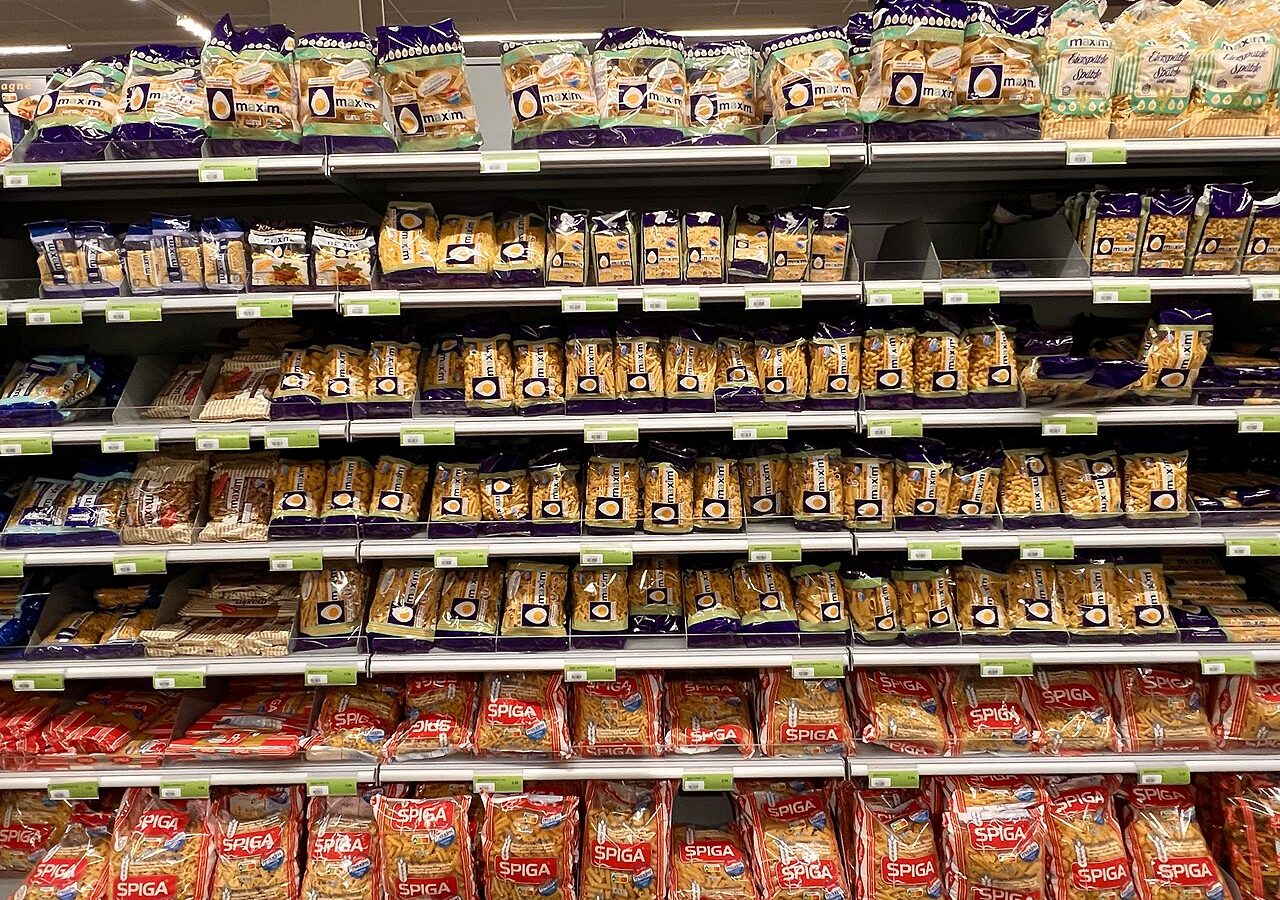
Buying the Middle Size: Why the Biggest Pack Is Often the Worst Deal
The largest pack almost always has the lowest price per gram, and it is frequently the most expensive thing you buy. The gap between unit price and actual cost is where a large part of a grocery budget disappears.
The unit price illusion
Supermarkets price the biggest pack at the lowest unit cost because that is what makes the shelf label look good. It is a genuine discount per gram and a terrible deal per household.
The question is not which pack is cheapest per gram. It is which pack you will finish before it spoils, goes stale or loses its appeal.
A two kilogram bag of rice at half the unit price is a great deal if you eat rice weekly and a waste of shelf space if you do not.
Where big packs genuinely win
Anything shelf stable that you use constantly. Rice, pasta, flour, oats, tinned tomatoes, oil, coffee if you drink it daily. These have long lives and predictable consumption.
Cleaning products and toilet paper also reward bulk buying, provided you have somewhere dry to store them. They do not degrade and they do not go out of fashion.
The test is simple. If you can predict with confidence that you will finish it within its shelf life, buy large.
Where the middle size wins
Anything perishable, anything novel, and anything where your consumption is uncertain. Spices, condiments, sauces, speciality flours, frozen items you have not tried before.
The middle size is also the right answer for households of one or two. A family pack of chicken thighs is only cheaper if the surplus gets eaten rather than frozen and forgotten.
And it is right for anything where variety matters. Six jars of the same pasta sauce at a discount is not a saving if you get bored after two.
The storage cost nobody counts
Bulk purchases consume space, and space in a small kitchen is not free. A cupboard filled with industrial quantities of kitchen roll means something else lives on the floor.
There is also the mental load. A shelf of half-finished large packs is a low background stress that nobody names but everybody feels.
If the storage is in a garage or a cellar, the calculus improves. If it is the one cupboard you have, it usually does not.
The discount trap
Multi-buy offers are engineered to move volume, and they work. Three for two on something you buy occasionally means buying three times as much as you needed.
Before taking a multi-buy, ask whether you would have bought that quantity at full price. If the answer is no, the offer has created a purchase rather than reduced one.
This is different from a straight price cut on a single item you were buying anyway. That is a genuine saving and worth taking.
A rule that works
Buy the smallest size of anything new, the middle size of anything you use regularly, and the largest size only of things you have already finished at least twice.
That rule prevents the two common failures: a cupboard full of things you tried once, and running out of the things you actually use.
It also gives you information. Buying small first tells you whether the item deserves shelf space, at a cost low enough that being wrong does not matter.
Reading the shelf properly
Unit prices are usually printed on the shelf edge label in small type. Look at it once per product category and you will learn which formats are genuinely discounted.
Compare like with like. Concentrated products have different dilution rates, so cost per litre is meaningless without knowing the dose.
And check the middle size specifically. It is frequently the one with no promotion at all, which means it is priced honestly while the others are being manipulated.
When the big pack is the right answer anyway
There is a case for buying large even when consumption is uncertain: when the item stores indefinitely and the discount is substantial. Tinned tomatoes at forty percent off are worth taking even if you only cook with them twice a month.
The distinction is between perishable and imperishable. A large pack of something with a two year shelf life is a storage decision. A large pack of something with a two week life is a waste decision.
Be honest about which one is in your trolley. Most of the mistakes happen with items that feel shelf stable but are not, like opened sauces and cooking oils.
And check the pack date, not just the best before. A large pack that has already spent a year in a warehouse has less usable life than the label suggests.
Next shop, buy the middle size of the three things you usually buy large. See whether you run out before the next trip. If you do not, you have just found money and shelf space at the same time.