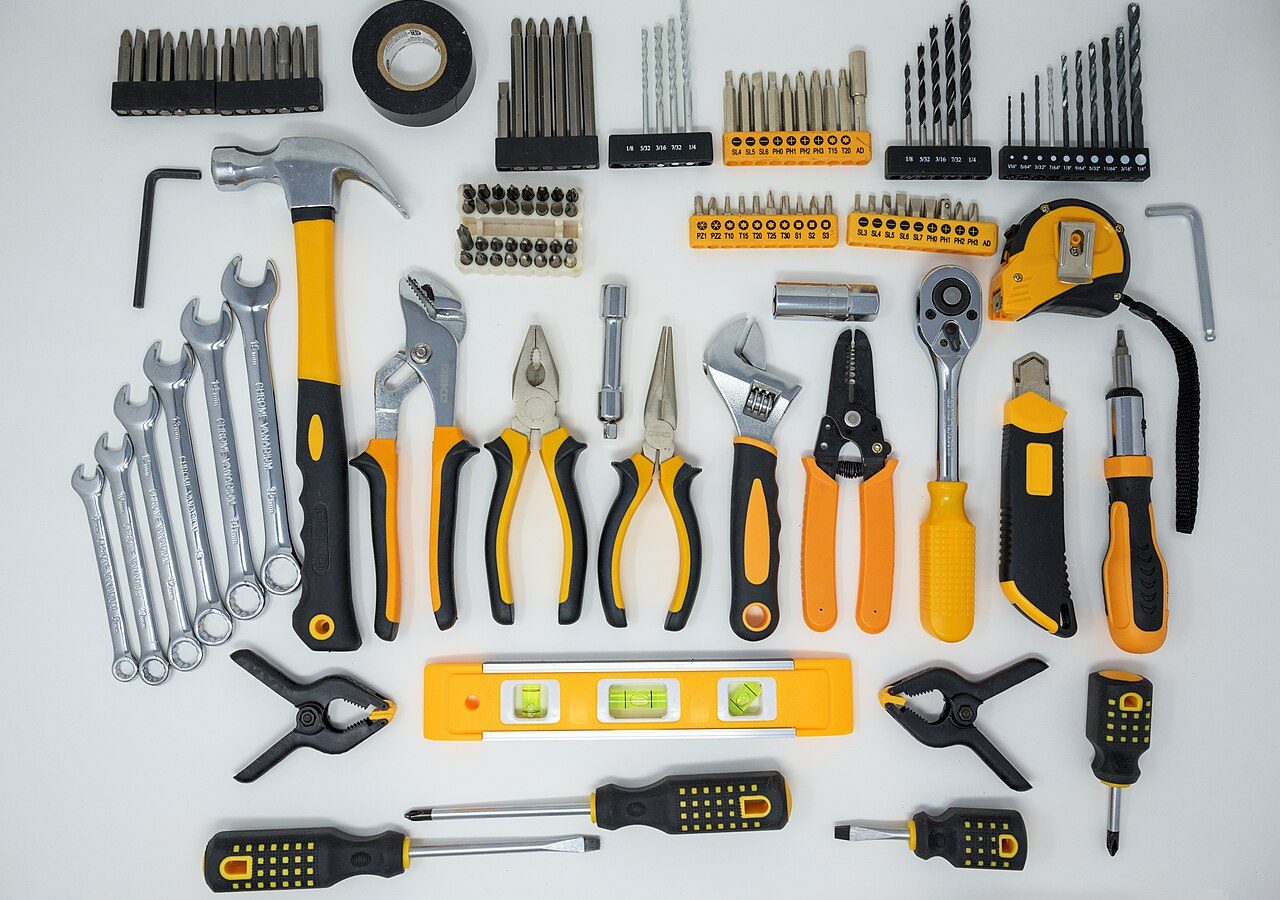
Cheap Tools That Cost More Later: Where to Spend and Where Not To
A six dollar screwdriver set and a forty dollar screwdriver do the same job on the day you buy them. Three years later one of them has rounded off every screw in your house and the other is still working. The cheap set did not save thirty-four dollars, it cost you a cupboard door.
The rule that actually holds
Spend on the tool that touches the fastener. Save on the tool that holds the tool. That single principle sorts most of the confusing advice about buying tools.
A cheap handle is fine if the bit is hard steel. A cheap bit in an expensive handle is the worst combination, because the bit rounds off and the handle outlives it uselessly.
Apply the same logic to kitchen knives. The steel matters, the handle matters less, and the block is pure decoration.
Where cheap is genuinely fine
Measuring tapes, levels, clamps, buckets and storage boxes. None of these have a hard job to do and none of them fail dangerously.
Spanners for occasional use are fine at the low end, though cheap chrome can flake. If you are working on a bicycle once a year, that is acceptable.
Anything you will use less than twice a year is a candidate for cheap, hire or borrow. Frequency is the best predictor of whether quality pays.
Where cheap is a false economy
Screwdriver bits, drill bits, saw blades and anything with a cutting edge. Cheap steel loses hardness in the first few uses and then destroys the thing you are working on.
Anything that holds weight: ladders, straps, climbing gear. This is a safety line, not a budget line, and it is not negotiable.
Anything with a battery. Cheap cells lose capacity fast and the replacement cost usually exceeds the difference you saved at purchase.
The hidden cost of bad tools
A rounded screw head turns a two minute job into a twenty minute extraction, and sometimes into a ruined piece of furniture. That cost never appears on the receipt.
Cheap drill bits wander on the surface, so holes end up in the wrong place. The wasted material usually costs more than the bits would have.
And there is the abandonment cost. A tool that does not work gets put away and never used again, which means the job gets paid for at professional rates instead.
Buying well without overspending
Buy the mid-range, not the top. Professional tools are priced for daily use and if you are using something four times a year, you are paying for durability you will never consume.
Buy one good item rather than a set. A single quality screwdriver used constantly beats a twenty-piece set where three pieces do all the work.
Buy second-hand for anything with no wearing parts. A cast iron vice, a clamp, a hammer, a level. These either work or they do not, and there is nothing to wear out.
What to do with the cheap ones you own
Do not throw them away reflexively. Keep them as the loaner set, the one that goes to a friend’s house or gets used on a job where damage is likely.
Replace them one at a time as they fail, and replace with something better. That spreads the cost and means you only upgrade what you actually use.
Write the replacement on a list when it fails rather than buying immediately. You will often find you did not need it, and the list prevents impulse purchases at the hardware shop.
Renting the tool you will use once
Some jobs need a tool that is expensive and used once: a tile cutter, a floor sander, a long ladder. Buying these is almost always the wrong call, and hire shops exist precisely for this.
A day’s hire on a floor sander costs about what a cheap one costs to buy, but the hired one works and the cheap one does not. That is the whole argument in one sentence.
For anything in between, ask around. Neighbours own more tools than you would guess and most are happy to lend. A message in a group chat has saved more money than any buying guide.
The exception is safety equipment. Never borrow a helmet, a harness or a respirator. Buy those new and keep them, because you cannot know the history of someone else’s.
And when you do hire, book it for a weekday. Weekend rates are higher and the queue is longer, which matters when you have a limited window to finish.
The one-page rule
Keep a note of every tool that failed you. When the same item appears twice, that is the signal to buy the good version. One failure is bad luck, two is a pattern.
Pick the one tool you reach for most often and check whether it is doing its job properly. If the tip is rounded or the blade is dull, replace that single item this month. One good tool changes more than a full set of mediocre ones.