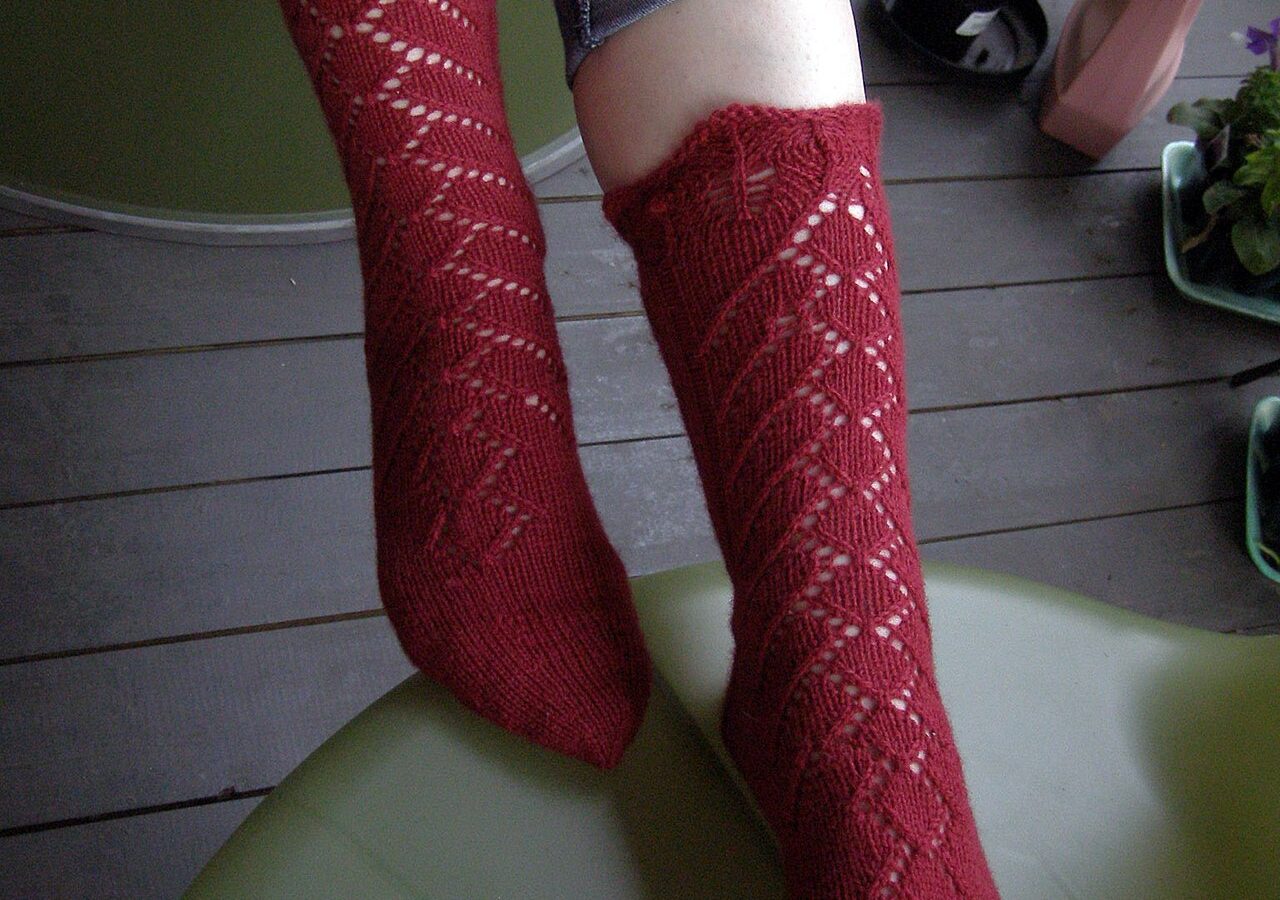
Darning a Sock: A First Attempt That Anyone Can Finish
A sock with a hole in the heel gets thrown away in about four seconds. Darning it takes fifteen minutes and produces a repair that outlasts the original fabric. The gap between those two facts is entirely psychological.
What darning actually is
Darning is weaving a patch into the fabric using needle and thread. You build a lattice of vertical threads across the hole, then weave horizontal threads through them, recreating the structure of the cloth.
It is not sewing. There is no seam and no overlap. The repair is a new piece of fabric grown in place, which is why it moves with the sock instead of pulling away.
That is also why it works so well. A sewn patch on a heel fails within days because the stitches concentrate stress. A darn distributes it.
What you need
A darning needle, which is a blunt-tipped needle with a large eye. A sharp needle splits the threads you just laid down and makes the result messy.
Yarn or thick thread in a similar weight to the sock. Embroidery floss works, as does thin wool. Do not use polyester sewing thread, which is too fine and cuts through the knit.
Something to hold the work under tension: a darning mushroom, a small jar, or a rolled-up magazine. A smooth rounded surface is what you need, and a jar is free.
The method, step by step
Turn the sock inside out and push the mushroom or jar into the heel so the hole sits on a firm curved surface. Anchor your thread with a couple of small stitches just outside the hole.
Work a series of straight stitches across the hole, from one solid edge to the other, running slightly into the good fabric each time. Keep them parallel and about three millimetres apart.
Now weave across those threads at right angles, passing over one and under the next, alternating each row. Do not pull tight. The darn should lie flat and slightly loose, because the sock needs to stretch.
The mistakes that make it fail
Pulling the threads too tight is the most common error. A tight darn cannot stretch, so it tears out at the edges the first time the sock is pulled on.
Using the wrong thread is the second. Fine polyester thread saws through wool fibres as the sock flexes, and the repair fails within weeks.
Not extending into solid fabric is the third. A darn that stops at the edge of the hole will pull out, because the edge is the weakest part.
Making it invisible or making it a feature
Matching yarn makes the repair nearly invisible, which is what most people want for office socks. It takes more care with tension and thread weight.
Contrasting colours turn the repair into a visible mend, which is faster because you stop worrying about perfection. Many people find this more satisfying and it has become a style in its own right.
Either is legitimate. The sock does not care, and nobody examines your heels closely enough for it to matter.
How long it lasts
A well-executed darn on a wool sock typically outlasts the original heel by a wide margin, because the darned area is thicker than the knit it replaces.
Chronic problems like a worn sole can be darned repeatedly. Each repair adds another layer, and the sock gradually becomes a patchwork that is warmer than the original.
If the hole keeps returning in the same place, the cause is usually fit or footwear rather than the repair. Check for grit in the shoe, which grinds through the heel in weeks.
Practising without risk
Start on a sock you were going to throw away. There is no downside to failure and the practice is identical to the real job.
Do not start on a jumper or a favourite garment. Socks are the right training ground because the stakes are zero and the surface is curved, which teaches tension control fast.
Two or three socks in, the motion becomes automatic and you will start looking for things to mend rather than things to replace.
Preventing the next hole
Most heel holes start with grit in the shoe. A grain of sand between sock and sole acts like sandpaper, and it works through the knit in a few wears.
Shake shoes out before putting them on, especially after walking outdoors. That one habit extends sock life more than any repair technique.
Trimming toenails properly also matters. A rough edge at the heel or toe wears through the fabric in exactly the place where holes always appear.
Finally, rotate your socks. Wearing the same pair daily gives the fibres no time to recover, and they fail much faster than a rotation does.
Find one sock with a hole and put it in a drawer rather than the bin. Buy a blunt darning needle and find a jar. Then spend fifteen minutes on it this week, with no expectation of a good result. The second one will be better.