A Repair Kit That Actually Gets Used, Not Just Assembled
Most homes have a repair kit somewhere. It is usually a tin with three bent needles, a spool of white thread and a screwdriver that fits nothing. The kit exists, which feels like progress, and nothing ever gets repaired, which is the part that matters.
Why the tin fails
A kit assembled in one optimistic afternoon is designed for the idea of repair rather than any specific job. It has too many things you will never use and is missing the one thing the current job needs.
Worse, it lives in a drawer behind something else. Friction is fatal here. If getting the kit out takes ninety seconds, the sock goes in the bin instead.
The fix is not a bigger kit. It is a smaller kit built around four jobs you actually have.
The four jobs worth covering
Sewing a button back on. This is the most common clothing failure by a wide margin and it needs one needle, one thread colour, and two minutes.
Mending a seam. A split seam on a shirt or cushion is a five minute job with a basic running stitch and it saves the item entirely.
Tightening a loose screw. Chairs, cupboard hinges and handles loosen constantly. One good screwdriver with interchangeable bits covers almost all of it.
Sticking two things back together. A broken mug handle, a split wooden toy, a loose tile. One decent adhesive handles most of these.
What to actually put in it
Six needles in mixed sizes, including at least two with large eyes for thicker thread. A small pair of sharp scissors, not the blunt kitchen ones. One spool of neutral grey thread that disappears against most fabrics, plus one black and one white.
A thimble is worth having and almost nobody owns one. It makes pushing through denim possible instead of painful.
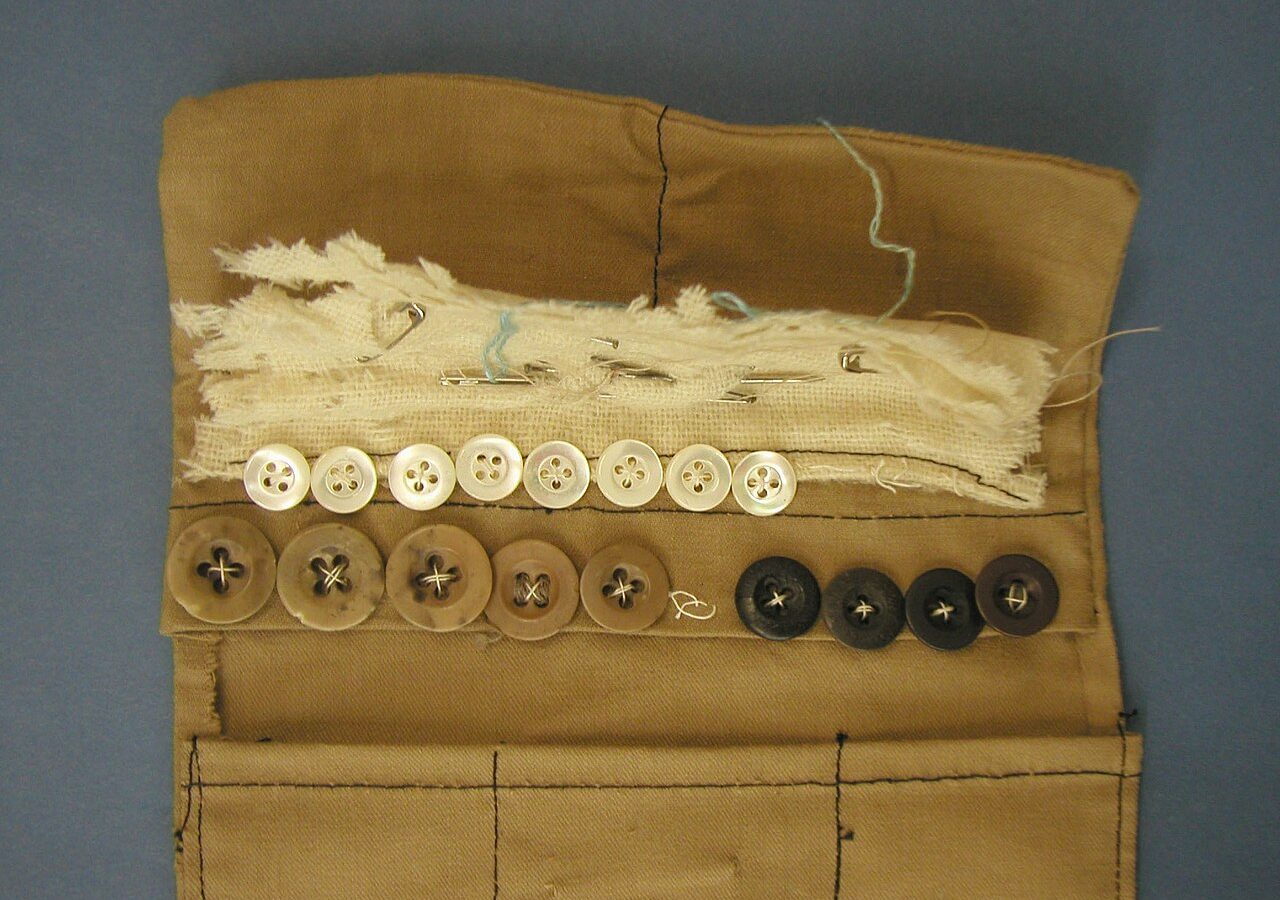
Safety pins in two sizes, a seam ripper, and a small tin of assorted buttons. That is the sewing half complete, and it fits in a sandwich box.
The non-sewing half
One screwdriver handle with six bits, including a small flathead and two Phillips sizes. Buy a decent one, because cheap bits round off screw heads and then the job becomes a bigger job.
A small pair of pliers and a roll of cloth tape. Tape fixes a surprising number of interim problems, from a fraying cable to a loose handle, and it buys you time to do the real repair.
Two adhesives, not five. A cyanoacrylate for hard surfaces and a PVA wood glue for timber. Anything else is a specialist purchase you make when the job arrives.
Where to keep it
In the room where repairs happen, not in a garage. For most flats that means a kitchen drawer or a shelf near the door. The kit must be reachable in under ten seconds.
Keep the thread colours together in a small bag inside the box so you are not hunting through a tangle every time. Small containers inside big containers is the whole trick.
Do not stack anything on top of it. A kit that needs unpacking is a kit that stays shut.
Building the habit
Set a rule: anything that fails gets ten minutes before it goes in the bin. Most repairs are under ten minutes, and the rule forces the assessment that people usually skip.
Keep a small basket for items awaiting repair, and clear it once a month. The basket makes the backlog visible, which is the only way it ever shrinks.
Start with the easiest possible win. A button, a seam, a loose handle. The first success is what turns a kit into a habit, and no amount of good intentions substitutes for it.
The jobs that are not worth doing
Not everything deserves ten minutes. A five dollar phone cable with a frayed end is a fire risk, and repairing it badly is worse than replacing it. Anything involving mains electricity should go to someone qualified, not to a kitchen table with tape.
Footwear with a cracked sole unit is usually finished, because the failure is structural rather than cosmetic. Glue will hold for a week and then fail in the same place. A cobbler can sometimes replace the whole sole, but only if the upper is worth the cost.
And then there is the time question. If a repair takes three hours and the replacement costs twelve dollars, the honest answer is to buy the replacement and spend the afternoon on something you care about. This is not laziness, it is arithmetic.
Draw the line at anything you would not finish. A half-repaired item in a basket is worse than one thrown away, because it occupies attention every time you see it.
The useful test is simple. If you cannot picture the finished repair clearly enough to know what the first step is, you do not know how to do it yet. Look it up properly, or take it to someone who does.
Open the drawer today and throw out the needles that are bent and the thread that snaps when you pull it. Then add one sharp pair of scissors and one grey thread. That is already a working kit, and it costs less than the thing you were about to replace.