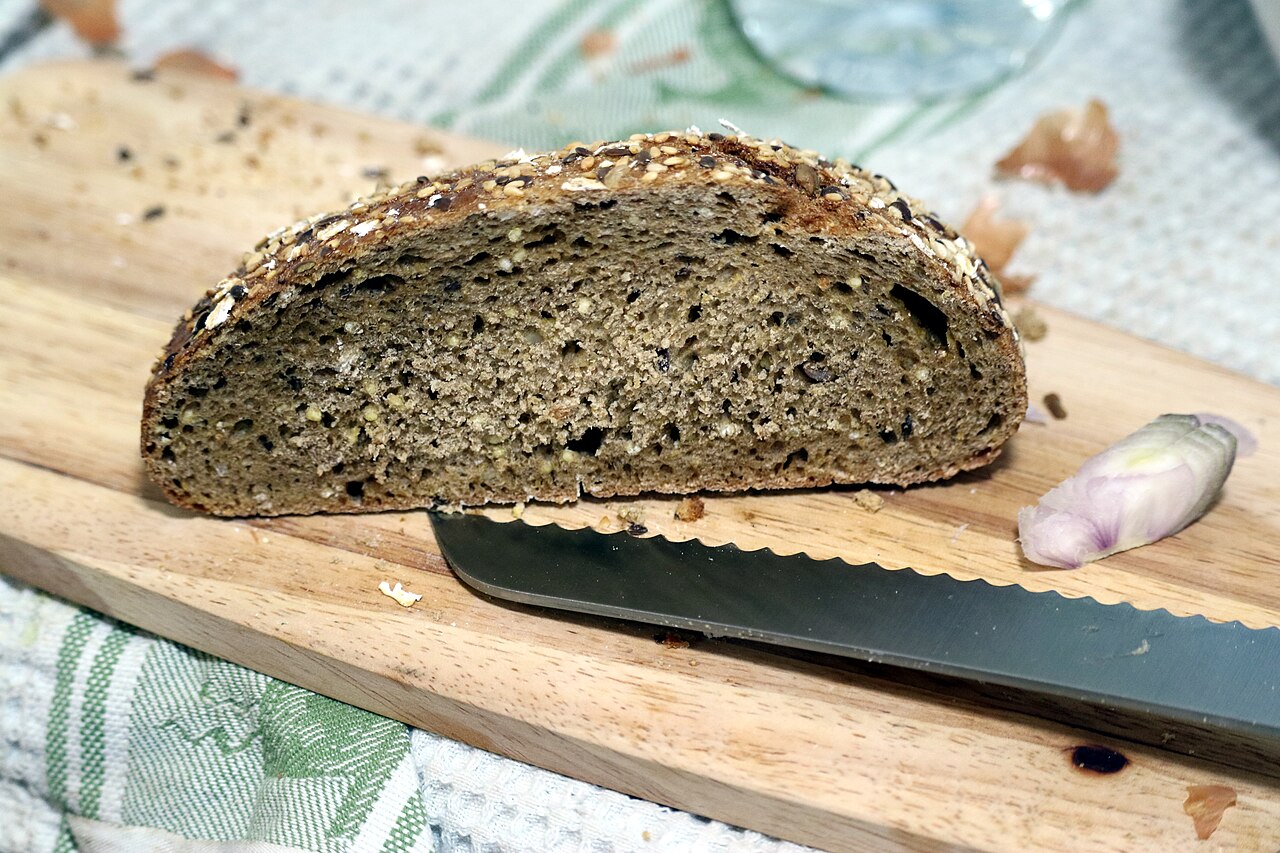
Storing Bread Without Plastic: What Actually Keeps It Soft
Bread in a plastic bag stays soft for three days and grows mould on the fourth. Bread in a paper bag is crusty on day one and stale by day two. The right answer sits between those two and it costs nothing to set up.
Why bread goes stale
Staling is not drying, it is a change in the starch structure called retrogradation. Starch crystals reorder themselves and squeeze out moisture, which is why stale bread feels hard rather than simply dry.
Heat reverses it temporarily, which is why a few seconds in a microwave or a hot oven makes bread soft again. That is not a trick, it is real chemistry.
Mould is the other failure, and it needs moisture and warmth. A sealed bag traps exactly those conditions, which is why plastic keeps bread soft and then turns on you.
The cloth and box method
A cotton or linen bag, loosely closed, keeps the crust from going leathery while letting excess moisture escape. Bread lasts two to three days this way and tastes considerably better than bagged bread on day one.
A simple wooden bread box does the same job with more capacity. It is not airtight, which is the point, and it keeps the loaf out of direct light.
Put a cut apple half in the box if you want an extra day. It releases moisture slowly and the effect is noticeable, though it will need replacing every few days.
The freezer is the real answer
If you buy a large loaf and cannot finish it in three days, freeze half on the day you buy it. Sliced first, so you can take what you need without thawing the whole thing.
Frozen bread keeps for three months with no meaningful loss. Thaw slices directly in a toaster, which is faster than defrosting and gives a better result than fresh in some cases.
This single habit eliminates most household bread waste. The loaf stops being a countdown and becomes a supply.
What not to do
Do not store bread in the fridge. The cold accelerates staling dramatically, and it is the most common mistake people make. Cold storage is worse than leaving it on the counter.
Do not put warm bread in a bag. The trapped steam softens the crust into leather and creates ideal mould conditions in a single afternoon.
Do not cut with a warm knife straight from the dishwasher. It squashes the crumb and compresses the loaf, which shortens its life visibly.
Buying differently
A whole loaf keeps better than a sliced one, because there is less exposed surface. If you buy sliced for convenience, freeze it immediately and take slices as needed.
Sourdough genuinely lasts longer than industrial bread. The acidity slows mould and the denser crumb holds moisture differently. It costs more and it earns it.
Smaller, more frequent purchases beat large ones if you have a bakery nearby. The waste from a stale half loaf usually exceeds the saving from buying a bigger size.
Reviving what has already gone firm
A loaf that is firm but not mouldy can be brought back. Run the whole loaf under a tap for two seconds, then bake at two hundred degrees for eight minutes. The crust comes back crisp and the crumb softens.
If it is too far gone for that, it is still good for croutons, breadcrumbs or a bread and butter pudding. Stale bread is an ingredient, not waste.
Mouldy bread is different. Do not cut the mould off a soft loaf, because the visible mould is the fruiting body and the roots run through the crumb. Bin it and start again with better storage.
The crust problem
Soft bread and crusty bread want opposite conditions. Soft bread wants moisture retained, crusty bread wants moisture released. Storing both the same way means one of them is wrong.
A crusty loaf should sit in paper, open to the air, and be eaten within a day. A soft sandwich loaf wants a cloth bag or a box. Putting a crusty loaf in a sealed container turns the crust to leather in four hours.
If you buy both, store them separately. It sounds fussy and it takes no effort once the bags are labelled.
Sliced bread dries from the cut faces, so keep the cut face against the board rather than exposed. A small thing that adds a day.
A note on the bag you came home with
The bakery paper bag is fine for a day and useless after that. Reuse it for the next loaf rather than binning it, and switch to cloth once it tears.
Take the loaf out of its plastic bag the moment you get home and put it in a cloth bag or a box. Freeze half if it will not be eaten in three days. That is the whole method, and it works on the first attempt.